

Elite dating sites promise exclusivity. They claim to connect you with high-earning professionals, CEOs, artists, and influencers-people who are hard to meet in everyday life. But here’s the truth: the same platforms that filter out the average user also attract people who want to exploit that filter. If you’ve paid hundreds for a membership and still feel like you’re chasing shadows, you’re not alone. Too many people fall into the same traps, over and over. And it’s not because they’re naive-it’s because the design of these sites makes deception easy.
Ghosting Isn’t Just Rude-It’s a Business Model
You match with someone who sends thoughtful messages, asks about your travels, remembers your coffee order from your profile. Then, poof. No reply. No explanation. Just silence. On regular apps, this feels like bad luck. On elite sites, it’s intentional.
These platforms rely on the illusion of scarcity. The more matches you think you’re getting, the more you stay subscribed. So, many users-especially those on free trials or low-tier plans-send out dozens of messages daily. They don’t care if you reply. They just need to appear active to keep their profile visible. Some even use bots to auto-generate responses. You’re not being ignored because you’re unattractive. You’re being ignored because your match has no intention of meeting you.
Real elite daters don’t mass-message. They curate. If someone reaches out with a personalized note referencing your last trip to Kyoto or your photography portfolio, that’s a sign. If their message reads like a template with your name pasted in? Walk away.
Fake Profiles Are Everywhere-Even the "Verified" Ones
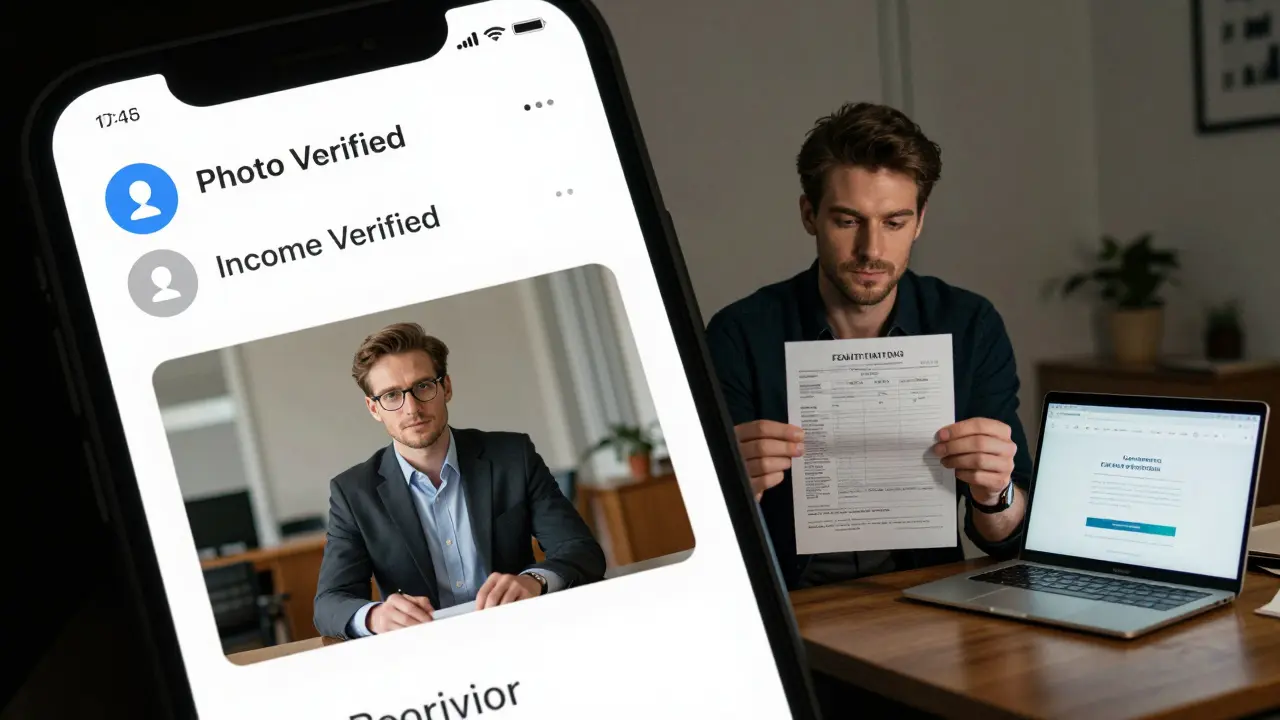
Elite sites love to boast about "verified profiles." They show a little badge next to names: "Photo Verified," "Income Verified," "LinkedIn Confirmed." Sounds solid, right? It’s not.
"Photo Verified" usually just means they uploaded a selfie with a piece of paper holding today’s date. No facial recognition. No live video. No cross-checking with public records. "Income Verified"? That’s often just a screenshot of a bank statement they uploaded themselves. No third-party audit. No proof it’s current.
I’ve seen profiles with "CEO of a tech startup" and a $250k annual income claim-then checked their LinkedIn. The company didn’t exist. The person was a freelance designer living in Bucharest. They’d used stock photos of boardrooms and copied buzzwords from pitch decks. And they’d been on the site for 14 months.
True verification requires a third party. Think: tax records pulled directly from HMRC, pay stubs from payroll systems, or a video call with a human moderator. If the site doesn’t explain how verification works in detail, assume it’s meaningless.
The Price Tag Doesn’t Mean Quality-It Means Profit
These sites charge $150, $300, even $800 a year. They market it as "premium access." But here’s what they don’t tell you: their revenue model is built on retention, not matches.
Think about it. If 10% of users find lasting relationships, the business fails. Their goal isn’t to help you settle down. It’s to keep you paying while you wait for the one person who might be real. That’s why they push you toward "premium features": unlock who’s viewed your profile, see who’s liked you, get a "priority boost." All of it is designed to make you feel like you’re getting closer-when you’re just spending more.
One user I spoke to in Manchester spent over $2,000 in 18 months. She matched with 72 people. Three replied. One showed up for coffee. He was a con artist using a stolen identity. She never got a refund.
Don’t confuse cost with value. A $50/month site with real moderation can outperform a $500/year platform with fake metrics.
They Sell the Dream-Not the People
Elite dating sites don’t sell connections. They sell fantasy. Their ads show couples in Monaco, sipping champagne on yachts, laughing in designer clothes. They imply that if you pay enough, you’ll become part of that world.
But wealth doesn’t guarantee compatibility. And many of the most active users aren’t wealthy at all-they’re people who crave the *image* of wealth. They’ll lie about their job, their home, their travel history. Why? Because they think that’s what you want to hear. And on these platforms, the right story beats the real truth every time.
I’ve met men who claimed to own private jets. Turned out, they rented them for weekend trips and inflated the cost. I’ve met women who said they ran art galleries in London. Their gallery was a rented room in a shared studio with one painting on the wall.
Ask specific questions. Not "What do you do?" but "Who do you report to?" or "What’s the last project you launched?" If they hesitate, change the subject, or give vague answers, they’re not who they say they are.
Too Many Rules, Not Enough Real Talk
Elite sites love rules. "Only message after 3 days." "Don’t mention kids until month three." "Never send a voice note before the third date." These aren’t dating tips-they’re psychological traps.
They’re designed to make you feel like you’re part of an exclusive club. But real chemistry doesn’t follow a checklist. If someone is genuinely interested, they’ll text you because they’re excited, not because they’ve hit day five of a 10-step protocol.
One woman told me she matched with a man who sent her a 12-page PDF titled "Dating Protocol for Elite Singles." She laughed, replied with a meme, and they ended up having dinner two nights later. No rules. Just honesty.
Ignore the manual. Pay attention to how they talk. Are they curious? Do they ask about your life? Or do they only talk about themselves, their status, their past relationships? The latter is a red flag.
What to Do Instead
Here’s what works:
- Use the site for 30 days max. If you haven’t met someone in person by then, quit. You’re not finding love-you’re paying for hope.
- Always meet in public, first time. No matter how "elite" they seem. A rooftop bar in Manchester is better than a private penthouse in Belgravia.
- Google their name + city. Look for LinkedIn, news mentions, or public records. If they’re real, there’s a trail.
- Ask for a video call before the first date. If they refuse, or keep making excuses, they’re hiding something.
- Trust your gut. If something feels off, it is. Elite doesn’t mean trustworthy.
The truth? The best elite daters aren’t on these apps. They’re at gallery openings, charity galas, or professional networking events. They don’t need to pay for a badge to prove they’re worth your time.
Final Thought
Elite dating sites aren’t evil. But they’re not helping you find love. They’re selling you a story you already believe: that love is something you buy. It’s not. It’s something you build-with honesty, patience, and real conversation. Don’t let a subscription fee make you forget that.
Are elite dating sites worth the money?
Most aren’t. The high price tags are designed to keep you paying, not to improve your chances of finding a real connection. Many users report spending hundreds without meeting anyone genuine. If a site doesn’t explain how it verifies profiles in detail-like using third-party data or live video checks-it’s likely not worth it. A $50/month platform with real moderation can outperform a $500/year site with fake metrics.
How can I tell if a profile is fake?
Look for inconsistencies. Check their LinkedIn-if they claim to be a CEO, does the company exist? Search their name with their city-real people leave digital traces. Ask specific questions: "What’s the last project you led?" or "Who’s your boss?" Vague answers, stock photos, or refusal to video call are major red flags. "Verified" badges on these sites usually mean nothing more than a selfie with a handwritten date.
Why do people ghost on elite dating sites?
Ghosting is often part of the business model. These platforms thrive on the illusion of activity. Many users send mass messages to stay visible, not to build relationships. Some use bots. Others are just testing the waters. The more matches they have, the more likely they are to keep their subscription. You’re not being rejected-you’re being ignored because your match has no real intention of meeting you.
Should I meet someone from an elite site in their home?
Never. Always meet in public for the first date. Even if they offer to pick you up in a luxury car or invite you to their "penthouse." Real people don’t need to prove their status by hosting you at home. If they refuse to meet in public, it’s a warning sign. Your safety matters more than their perceived prestige.
What’s the best way to spot a scammer?
Scammers on elite sites often ask for money early-"I need help with a legal fee," or "My account is frozen." They’ll also avoid video calls, use stolen photos, and give inconsistent stories. Check their social media. If their Instagram only has travel pics from 2019 or no posts at all, that’s suspicious. Ask them about details only someone real would know: "What’s your favorite local café?" or "Who did you vote for in the last election?" If they dodge, walk away.